

With the rise in health awareness, more and more consumers are focusing not only on the efficacy of the contents when purchasing dietary supplements or medicines but also turning their attention to the outer coat-the capsule shell. Compared to traditional gelatin capsules (animal-sourced), plant-based capsules are increasingly favored for their natural, safe, and animal-free characteristics. However, many people have a question when purchasing or stocking up: How long is the shelf life of plant-based capsules? This article will provide a detailed analysis of this topic.
I. The Standard Shelf Life of Vegetable Capsules
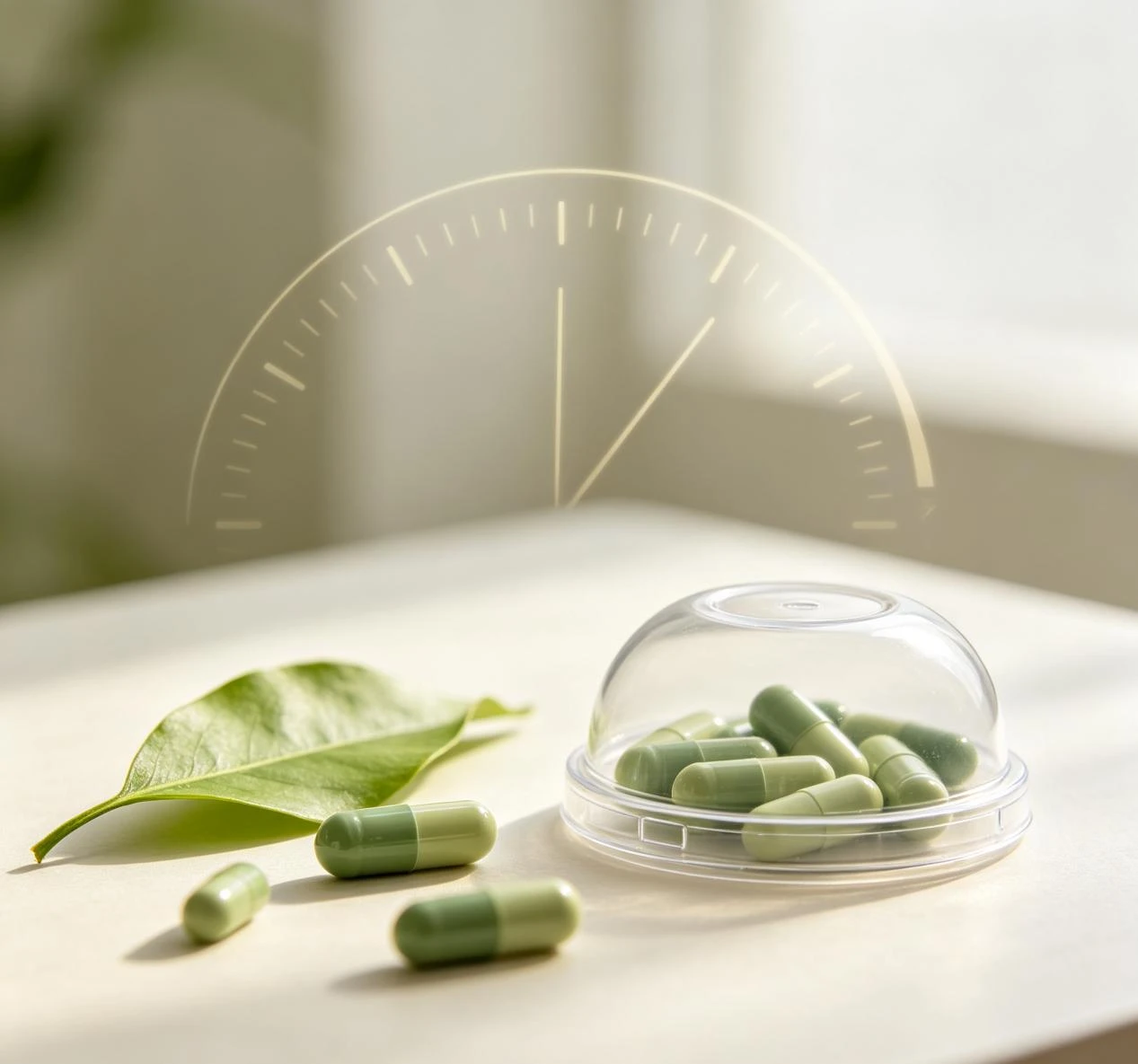
Typically, under compliant storage conditions, the standard shelf life of plant-based capsules is generally 3 to 5 years.
This time frame is longer than that of traditional gelatin capsules. Traditional gelatin capsules are prone to moisture absorption and mold, often limiting their shelf life. In contrast, the main ingredient of plant-based capsules is Hydroxypropyl Methylcellulose (HPMC). This plant-derived material is chemically more stable and less prone to cross-linking reactions, resulting in a longer shelf life. Most pharmaceutical companies label an expiration date of around 3 years on the packaging to ensure the dual stability of both the medicinal efficacy and the capsule structure.
II. Key Factors Influencing Shelf Life
Although vegetable capsules can theoretically be stored for a long time, "shelf life" is not a fixed number; it depends heavily on the storage environment.
Humidity Control: Although vegetable capsules have better tolerance to humidity than gelatin capsules, in high-humidity environments, the capsule shell can still absorb moisture, leading to softening, sticking, or even deterioration. Conversely, in an overly dry environment, the capsule shell can lose moisture and become brittle, prone to cracking. It is generally recommended to control relative humidity between 35% and 65%.
Temperature Influence: High temperatures accelerate material aging. Vegetable capsules should be stored in a cool, dry place away from direct sunlight. The suitable temperature is typically between 15°C and 25°C.
Influence of Fill Material: The lifespan of the capsule is also related to its contents. If filled with highly hygroscopic powders or oily substances, the service life of the capsule shell may be shortened.
III. How to Determine If Vegetable Capsules Have Expired?
As consumers, we can judge whether plant-based capsules are still suitable for use through the following sensory characteristics:
Appearance: Normal vegetable capsules have an uniform color and a smooth surface. If spots, discoloration, or sticking/deformation between capsules are found, it indicates moisture damage and deterioration.
Texture: Gently pinch the capsule. If it is abnormally hard and brittle, or too soft and collapsed, these are abnormal conditions.
Smell: High-quality plant-based capsules have a faint plant scent or are odorless. If a rancid, moldy, or pungent odor is detected, stop using them immediately.
IV. Storage Recommendations
To ensure vegetable capsules remain in optimal condition within their shelf life, it is recommended to place them in well-sealed containers in a cool, dry, and ventilated area. Large temperature differences and high humidity are "killers" for capsules.
In summary, thanks to their material stability, vegetable capsules usually have a shelf life of 3 to 5 years. However, the answer to "how long is the shelf life" ultimately depends on whether you have provided the correct storage environment. Scientific storage is the only way to safeguard your health.


