

In the pharmaceutical and nutraceutical industries, capsule dosage forms are widely used due to their ease of portability and ability to mask unpleasant odors. Among them, enteric-coated capsules, as a special functional pharmaceutical excipient, play a crucial role. During the procurement or R&D process, many pharmaceutical companies focus on a core indicator: What is the disintegration time of enteric-coated capsules? This article will analyze this issue in detail to help you gain a deep understanding of the disintegration characteristics and importance of enteric-coated capsules.
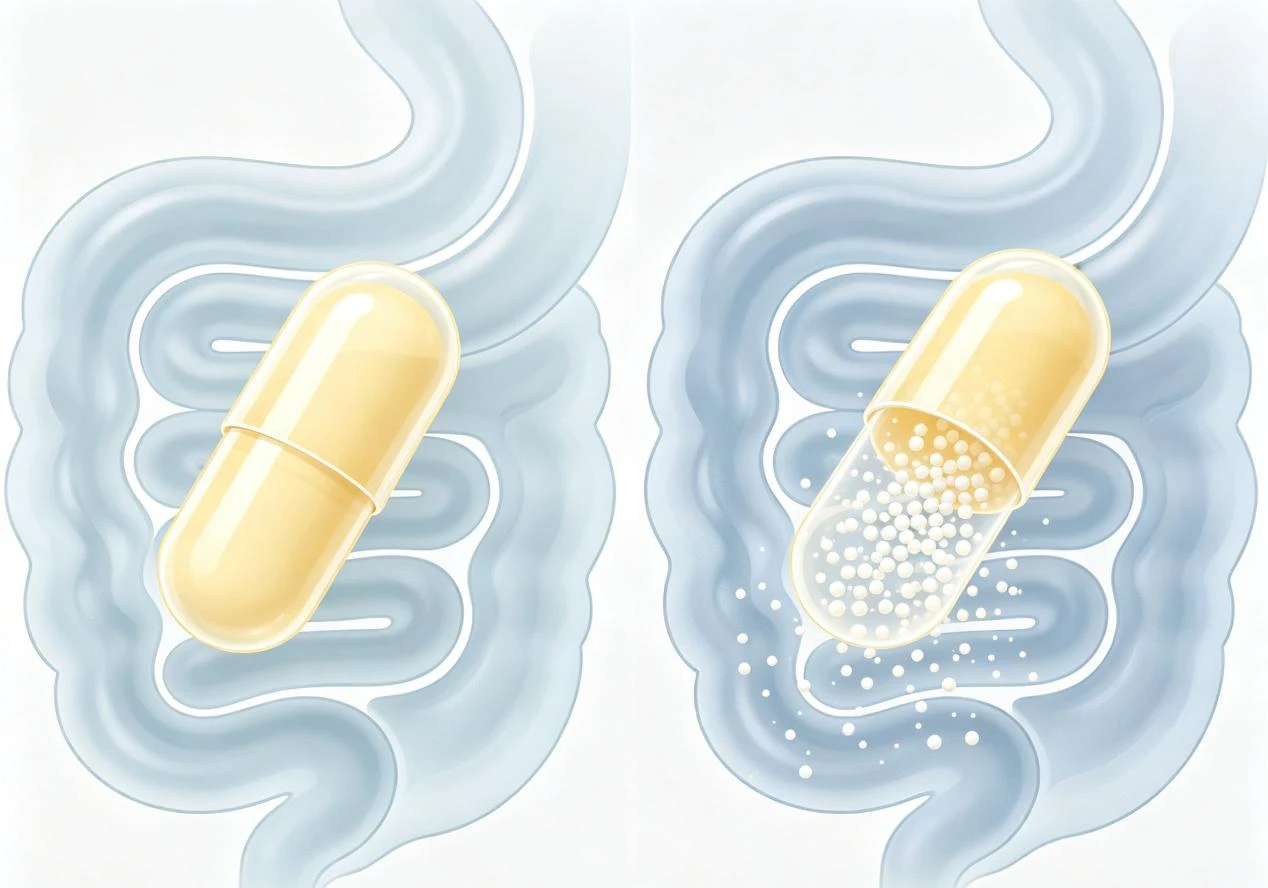
I. Standard Disintegration Time of Enteric-Coated Capsules
According to the Chinese Pharmacopoeia and relevant national standards, the disintegration time of enteric-coated hard capsules is strictly defined. Simply put, its disintegration process is divided into two stages, corresponding to the environments of different digestive organs in the human body:
Gastric Fluid Environment (Acid-Resistant Stage):
Enteric capsules must remain stable in gastric fluid without disintegrating or leaking. The standard usually requires that within 2 hours of oscillation or immersion in artificial gastric fluid (pH 1.2 hydrochloric acid solution), the capsule must show no signs of cracks, disintegration, or leakage of contents. This is to ensure the drug safely passes through the stomach, preventing gastric acid from degrading the drug components or the drug from irritating the gastric mucosa.
Intestinal Fluid Environment (Disintegration Stage):
When the capsule enters into the intestinal environment, it needs to release the drug rapidly. The standard requires transferring the capsule tested in gastric fluid into artificial intestinal fluid (pH 6.8 phosphate buffer), where its disintegration time is usually required to be within 60 minutes (some high standards require a shorter time, such as within 30 minutes). The specific time varies slightly depending on the manufacturer's process and model, but the core principle is "disintegrate upon reaching the intestine".
Therefore, the disintegration time of enteric-coated capsules is not a single figure, but a comprehensive embodiment of "no disintegration in gastric fluid (≥2 hours)" and "rapid disintegration in intestinal fluid (≤60 minutes)".
II. Why is Disintegration Time So Important?
The design intent of enteric-coated capsules is "site-specific release". If the disintegration time is substandard, it can have serious consequences:
Premature Disintegration (In the Stomach): This may lead to the degradation of the drug by gastric acid, reducing efficacy; or the drug may irritate the stomach, causing adverse reactions such as nausea and vomiting.
Delayed Disintegration (In the Intestine): If the capsule disintegrates too slowly in the intestine, the drug cannot be released at the optimal absorption site in the small intestine, leading to reduced absorption rates or even being excreted from the body before release.
Therefore, strictly controlling disintegration time is key to ensuring the bioavailability and therapeutic efficacy of the drug.
III. Factors Affecting Disintegration Time
Although national standards have unified regulations, in practical application, disintegration time can be influenced by various factors:
Raw Material Composition: High-quality enteric capsules usually use gelatin coated with enteric coating materials (such as Cellulose Acetate Phthalate CAP, Acrylic resin, etc.). The thickness and uniformity of the coating layer directly determine the acid resistance time and disintegration speed.
Storage Conditions: Humidity and temperature significantly affect the capsule shell. Excessive humidity may cause the capsule shell to soften, altering its physical properties and thereby affecting disintegration time.
Nature of Contents: If the filled drug powder or granules have hygroscopicity or special pH levels, they may interact with the capsule material, interfering with the normal disintegration process.
IV. Conclusion
To sum up, what is the disintegration time of enteric-coated capsules? The answer is: no disintegration within 2 hours in artificial gastric fluid, and usually disintegration within 1 hour in artificial intestinal fluid. For pharmaceutical companies, selecting a supplier of enteric-coated capsules that meets pharmacopoeia standards and offers stable quality is the prerequisite for ensuring drug safety and efficacy. During procurement, be sure to request samples for disintegration time testing to ensure the product meets your specific process requirements. If there is any questions about empty capsules, welcome to contact with KornnacCaps.


