

When purchasing dietary supplements and medications, do you ever check the ingredient list for "titanium dioxide"? As a common colorant and whitening agent, titanium dioxide (E171) has long been widely used in the production of capsules and tablets. However, with rising health awareness and stricter regulatory policies, titanium dioxide-free capsules are becoming the top choice for an increasing number of consumers. This article will provide a comprehensive overview of what you need to know about TiO₂-free capsules.
1. Why Was Titanium Dioxide Added in the Past?
Due to its excellent whitening and opacifying properties, titanium dioxide was previously added to capsule shells or tablet coatings. It gave products a brighter, whiter, and more glossy appearance while preventing light from penetrating the capsule and degrading the active ingredients inside. For a long time, it was considered a safe and cost-effective excipient.
2. Why is the Shift to TiO₂-Free Happening Now?
In recent years, there has been ongoing controversy regarding the safety of titanium dioxide. Although it is not absorbed by the human body, studies suggest that it may contain nanoparticles, posing potential genotoxic risks and negative effects on gut microbiota.
Out of an abundance of caution for consumer health, the European Food Safety Authority (EFSA) officially classified titanium dioxide as no longer safe for use as a food additive in 2022, and the EU has subsequently banned its use. While it remains permitted in other regions, the global trend toward eliminating titanium dioxide is irreversible.
3. Advantages of Titanium Dioxide-Free Capsules
Safer and Purer: By eliminating potential health hazards, these capsules avoid unnecessary chemical additive intake, making them ideal for individuals who take dietary supplements long-term.
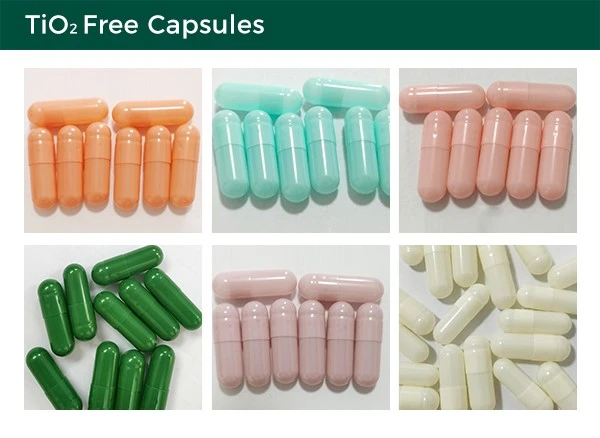
Aligns with Natural Trends: They cater to modern consumers' demand for "clean label" products. Titanium dioxide-free capsules are typically made from natural plant cellulose (such as HPMC capsules), which not only excludes titanium dioxide but is also non-GMO and free of animal-derived ingredients, making them suitable for vegans and vegetarians.
Enhances Brand Trust: For brand owners, utilizing titanium dioxide-free capsules demonstrates a responsible attitude toward consumer health, helping to boost the product's competitiveness in the market.
4. How to Identify and Choose Titanium Dioxide-Free Capsules
When buying supplements, it is advisable to make a habit of checking the "Supplement Facts" or "Other Ingredients" list. If "titanium dioxide, or "E171" does not appear on the label, it is generally a titanium dioxide-free capsule. Additionally, you can look for specific claims like "Titanium Dioxide-Free" or "Clean Label" on the product packaging.
Conclusion
Health is in the details, and excipients matter just as much as active ingredients. The transition from traditional capsules to titanium dioxide-free capsules is not just a leap in manufacturing technology, but an elevation of health concepts. When choosing your daily nutritional supplements, prioritizing titanium dioxide-free capsules is a crucial step toward reducing your body's burden and making a smarter choice. We hope this overview of what you need to know about titanium dioxide-free capsules provides valuable guidance for your future health and wellness purchases. If there is any questions about empty capsules, welcome to contact with KornnacCaps.


