

As an essential carrier for pharmaceutical preparations, the stability of gelatin capsules directly impacts the quality and safety of drugs. Among the various factors affecting stability, thermal denaturation is a critical characteristic that requires close attention during the storage, transportation, and use of these capsules, as it directly influences their structural integrity and drug release performance.
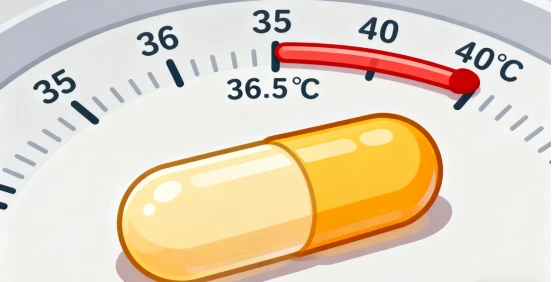
Gelatin is a natural high-molecular-weight protein whose molecular chains maintain a triple-helix structure through interactions like hydrogen bonds. When the ambient temperature exceeds its critical value, these gelatin molecular chains transition from an ordered helical structure to a disordered random coil structure. This process is known as thermal denaturation. The thermal denaturation temperature of gelatin capsules typically ranges between 35°C and 40°C, with the specific value influenced by factors such as the gelatin source (e.g., porcine skin, bovine hide, or fish bone), bloom strength, moisture content, and the types of additives used. For instance, high-bloom gelatin, with its higher degree of molecular chain cross-linking, generally has a higher denaturation temperature, whereas increased moisture content can weaken hydrogen bonds, leading to a lower denaturation temperature.
The impact of thermal denaturation on capsule performance is primarily manifested in three aspects. Firstly, it leads to a decline in mechanical properties; denatured capsule shells become softer, lose elasticity, and are prone to adhesion, deformation, or even rupture. Secondly, it alters permeability, as the reorganization of molecular chains may increase the pore size of the capsule wall, affecting the drug's moisture resistance and light-blocking properties. Thirdly, it can cause abnormal disintegration performance, as denaturation may disrupt the swelling properties of gelatin, resulting in delayed or ineffective drug release. For example, in high-temperature and high-humidity environments, capsules may exhibit a Softening and Adhesion phenomenon, severely affecting their packaging and use.
To mitigate the risks associated with thermal denaturation, the production of gelatin capsules requires optimized formulations. This can include adding plasticizers like glycerin or sorbitol to enhance the flexibility of molecular chains or using cross-linking agents to improve thermal stability. During storage, strict control over temperature and humidity is essential (typically requiring a temperature below 25°C and relative humidity below 60%), avoiding direct sunlight and high-temperature environments. Furthermore, new capsule materials, such as (hydroxypropyl methylcellulose) HPMC capsules, which have a much higher thermal denaturation temperature (can reach above 70°C), are gradually becoming ideal alternatives for drug formulations intended for high-temperature environments.
In conclusion, thermal denaturation is an inherent characteristic of gelatin capsules that must be managed through material optimization, process control, and standardized storage. A thorough understanding of this property is crucial for ensuring drug quality, extending shelf life, and provides a theoretical basis for the research and development of new capsule materials. If there is any demands on empty capsules, welcome to contact KornnacCaps.


