

When we take medicine for an illness, we often encounter capsules of various shapes and sizes. Some are transparent, others are colorful, all lightly encasing powdered or granulated medication to make swallowing easier. But have you ever wondered what this Invisible coat, known as an empty capsule, is actually made of? Is it safe? In fact, the materials used to make empty capsules are far more rigorous and scientific than one might imagine.
Currently, empty capsules on the market can be broadly divided into two main categories: gelatin capsules and vegetable capsules.
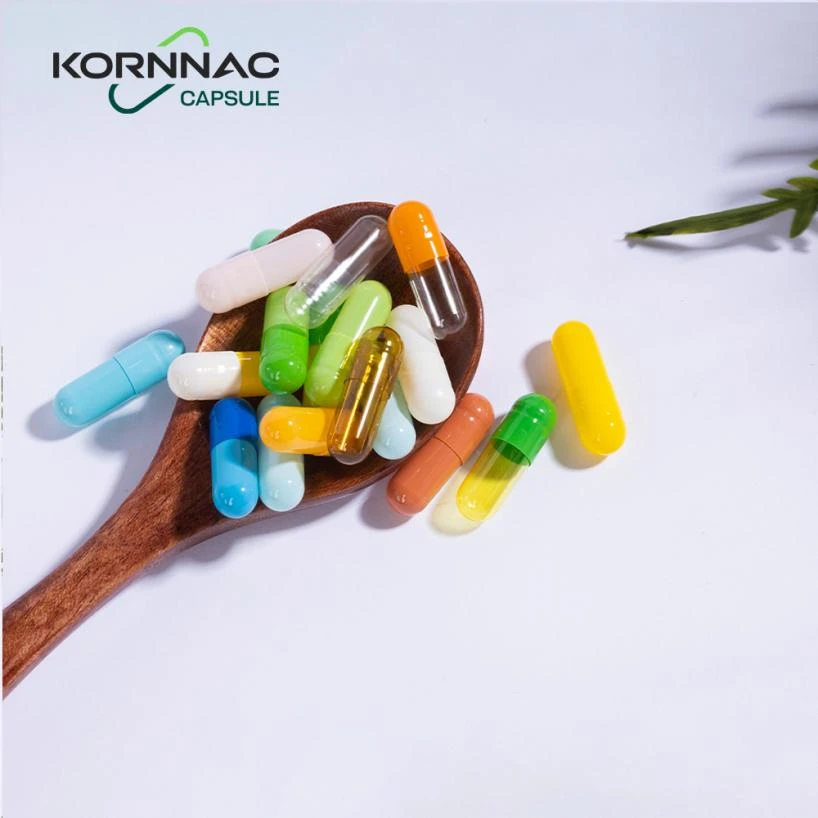
The Mainstream Choice: Gelatin Capsules
The vast majority of empty capsules we encounter are made from gelatin. Gelatin is a natural high-molecular-weight material extracted from animal collagen. Its raw materials typically come from the skin, bones, and connective tissues of healthy animals. Through a rigorous process of acid, alkali, or enzymatic treatment, the insoluble collagen is hydrolyzed into soluble gelatin.
Gelatin has become the Gold Standard for capsule manufacturing due to its multiple advantages. Firstly, it possesses excellent biocompatibility, meaning it dissolves safely and quickly within the human body without causing adverse reactions. Secondly, gelatin has outstanding film-forming properties, allowing it to create a smooth, tough, and somewhat elastic film. This film effectively protects the drug's contents while ensuring it ruptures at the right time in the digestive tract for release. Furthermore, gelatin is widely available, relatively low-cost, and its production process is mature, enabling large-scale, standardized manufacturing.
Of course, gelatin capsules have their limitations. Because they are derived from animals, they are not suitable for vegans and vegetarians. Additionally, for people of certain religious faiths (such as Islam and Judaism), the source's Halal or Kosher certification is crucial. Moreover, in high-temperature and high-humidity environments, gelatin capsules can become sticky or brittle, posing specific requirements for storage conditions.
The Emerging Force: Vegetable Capsules
To meet the needs of different groups and overcome the drawbacks of gelatin capsules, vegetable capsules have emerged. They completely abandon animal-derived ingredients and are sourced from natural plants.
There are two common types of vegetarian capsules. One is the Hydroxypropyl Methylcellulose (HPMC) capsule, whose raw material comes from plant cellulose (such as cotton or wood pulp). HPMC capsules are chemically stable, unaffected by temperature and humidity, and are free of proteins, fats, and starches, which reduces the risk of cross-contamination. Another type is the Pullulan capsule, produced through microbial fermentation. It has an excellent oxygen barrier, making it superior at protecting oxygen-sensitive drug ingredients.
The advent of vegetable capsules provides an ideal choice for vegans, individuals with specific religious beliefs, and consumers sensitive to animal-derived products. It represents a trend in capsule technology towards greater inclusivity and stability.
Conclusion
In summary, whether they are traditional gelatin products or emerging plant-based ones, empty capsules undergo rigorous scientific validation and safety assessments. They are not just simple packaging for drugs; they are a critical component of the modern pharmaceutical industry, ensuring accurate drug dosage, improving patient compliance, and controlling drug release. This small Coat embodies the wisdom of materials science and biotechnology, silently safeguarding our health. If there is any demands on empty capsules, welcome to contact KornnacCaps.


