

In the manufacturing process of empty capsules, the viscosity of the gelatin solution is a core indicator determining the molding quality, thickness uniformity, and disintegration time of the capsules. To ensure that every batch of capsules meets high-quality standards, the process of automatic viscosity measurement and adjustment must adhere to strict standardized operating procedures. The following are five key steps in the automatic viscosity measurement of empty capsules, which together form a critical line of quality control.
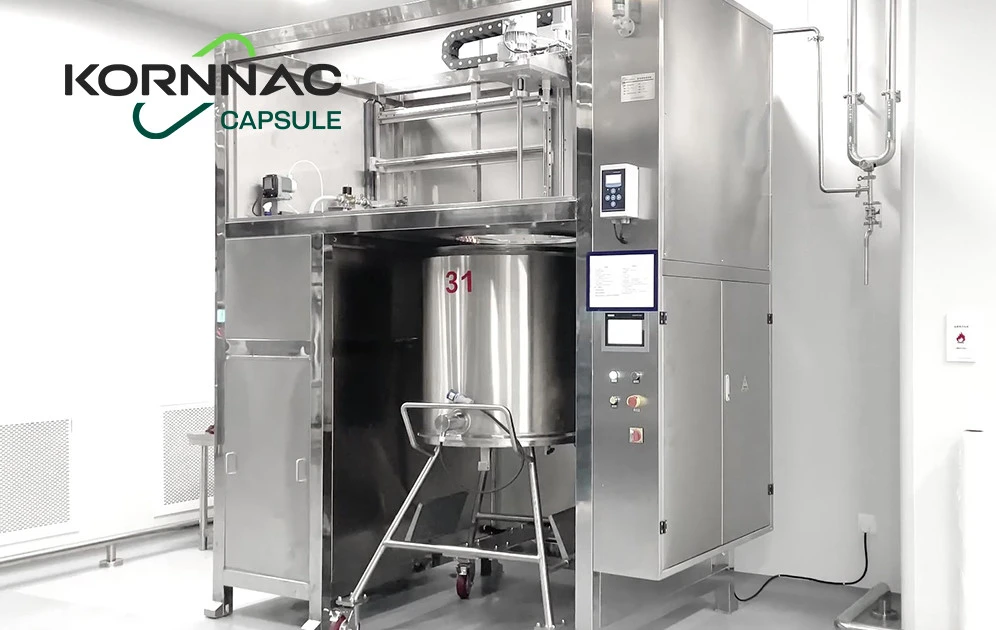
The first step is the strict implementation of material batch management and the FIFO (First In, First Out) principle. Before starting the viscosity adjustment, operators must carefully verify the production batch number on the Gelatin Solution Process Sheet. Adjusting viscosity according to the FIFO principle effectively prevents waste caused by expired materials, ensures the accuracy of production traceability, and safeguards the basic quality of the gelatin solution from the source.
The second step is precise adjustment based on parameters. The gelatin solution to be tested is placed under constant temperature conditions (typically based on 50℃ gelatin standards) and measured using an automatic viscometer. Operators must perform precise adjustments according to the established viscosity parameter range for the solution. This step is the core of quality control, ensuring that the rheological properties of the solution are best adapted to the subsequent dipping process, thereby guaranteeing the molding effect of the capsules.
The third step is sealing and heat preservation. After the viscosity of the gelatin solution has been qualified, it is not left directly exposed to the air. Instead, the make-up bucket must be immediately sealed with plastic wrap and insulated. This measure is crucial; it prevents surface crusting or moisture evaporation of the solution while maintaining a constant temperature, thereby avoiding viscosity rebound or drop caused by temperature fluctuations.
The fourth step is standardized recording and labeling. Once the adjustment is complete, the operator must truthfully fill in the Gelatin Solution Process Sheet, recording viscosity data and operational details in detail. Subsequently, this document is hung in a dedicated plastic clip on the transfer containerbarrel. This not only facilitates quick verification of information by personnel in the next process but also serves as an important means of achieving full-process traceability in production.
The fifth step is equipment cleaning and maintenance. After the viscosity adjustment work is finished, all equipment in contact, including the viscometer, rotors, glue mixing table, and make-up buckets, must be thoroughly cleaned. This step is not only to maintain a hygienic and tidy production environment but also to prevent cross-contamination between different batches of gelatin solution, ensuring the accuracy of the next measurement.
In summary, these five key steps are interlinked. From material management, precise measurement and adjustment, sealing and insulation, recording and labeling, to equipment cleaning, every detail directly impacts the final quality of the empty capsules. Only by strictly executing these steps can the efficiency and stability of empty capsule production be achieved.
[ Request Free Uniform-Thickness Capsule Samples & Quotation ]


