

The filling of empty capsules is a core process in the manufacturing of solid dosage forms, and the quality of its production environment directly determines the safety, stability, and efficacy of the drug. Because empty capsules are hygroscopic, prone to contamination, and come into direct contact with the medication during filling, the production environment is subject to extremely stringent requirements. It must be controlled in all aspects in strict accordance with Good Manufacturing Practices (GMP), including cleanliness, temperature and humidity, pressure differentials, facility equipment, and personnel management.
1. Cleanliness Control: Blocking Microbial and Particulate Contamination
Cleanliness is the primary indicator for the empty capsule filling environment. According to GMP standards, non-sterile empty capsule filling is typically conducted in a Grade D clean area, requiring no more than 3,520,000 airborne particles ≥0.5μm per m³ and settling microbes no more than 200 CFU/plate. For sterile capsules, filling must be performed in a Grade A unidirectional flow environment within a Grade D background, with airborne particles no more than 3,500 per m³ and settling microbes no more than 1 CFU/plate. Clean areas must be purified by a three-stage air filtration system (pre-, medium-, and high-efficiency) and regularly tested for indicators such as airborne particles, floating microbes, and settling microbes to ensure continuous compliance, preventing microbial and particulate contamination of capsules and drugs.
2. Precise Temperature and Humidity Control: Ensuring the Stability of Capsules and Materials
The main component of empty capsules is gelatin, which is highly sensitive to temperature and humidity. High humidity can cause capsules to become soft, sticky, or even deformed, while low humidity can make them brittle and increase the breakage rate. At the same time, temperature and humidity also affect the flowability of materials and filling accuracy. Therefore, the temperature in the filling environment must be strictly controlled between 18-26°C and relative humidity between 45%-65%. To achieve this, clean areas must be equipped with precision air conditioning systems that monitor and adjust temperature and humidity in real-time, ensuring a stable production environment and preventing quality issues or dosage inaccuracies caused by environmental fluctuations.
3. Pressure Differentials and Airflow Organization: Preventing Cross-Contamination
To prevent backflow of air from lower-grade areas that could cause cross-contamination, a reasonable pressure differential must be maintained between areas of different cleanliness levels. Typically, the pressure differential between the clean area and the non-clean area, and between adjacent rooms of different cleanliness levels, should be ≥10 Pa, while the pressure differential of the clean area versus the outdoors should be ≥15 Pa. Airflow organization should adopt a Unidirectional Flow or Non-unidirectional Flow design to ensure air moves from areas of higher cleanliness to areas of lower cleanliness, avoiding eddies and dead corners. This effectively removes dust and microbes generated during production and safeguards the air quality of the operating area.
4. Facility, Equipment, and Material Management: Reducing Contamination Risks
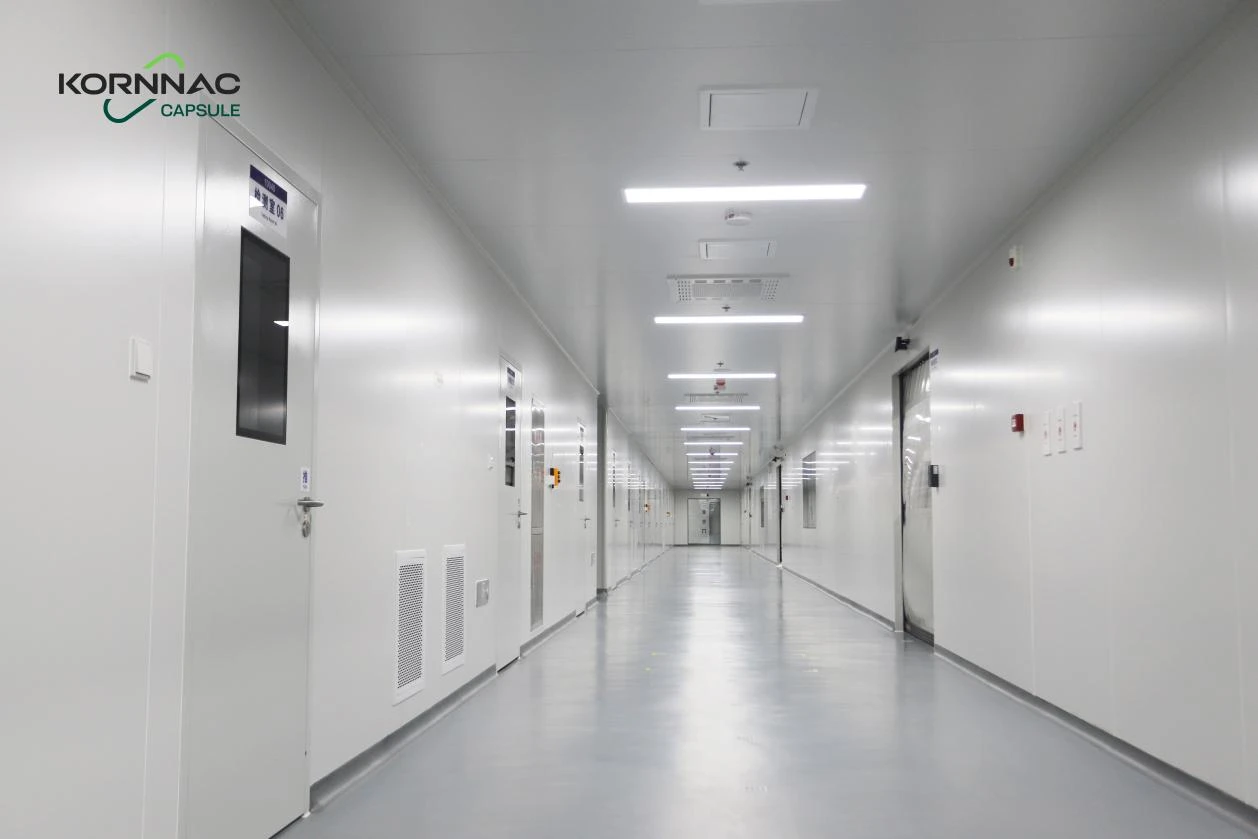
The floors, walls, and ceilings in clean areas should be constructed of seamless, corrosion-resistant, and easy-to-clean materials (such as epoxy resin or color steel plates) with smooth, flat surfaces that do not easily accumulate dust. Equipment surfaces must be smooth and free of dead corners. Components in direct contact with materials should be made of non-toxic, corrosion-resistant 316L stainless steel and be regularly cleaned and disinfected. Equipment like filling machines and polishing machines should be designed as enclosed systems to minimize dust dispersion, and be equipped with local dust extraction devices. Before entering the clean area, materials must pass through an airlock or a transfer window, and their outer packaging must be cleaned and disinfected to prevent introducing external contaminants.
5. Personnel and Hygiene Management: Cutting Off Human-Made Pollution Sources
Personnel are the largest source of contamination. Entry into the clean area requires a strict gowning procedure: changing shoes, washing hands, and putting on cleanroom garments (including a hat, mask, gloves, and cleanroom shoes) to ensure no hair or skin is exposed. Operators must receive professional training to be familiar with GMP regulations and operating procedures. Cosmetics and jewelry are prohibited, and unnecessary movement and conversation should be minimized. Furthermore, clean areas must have strict cleaning and disinfection procedures for daily cleaning and periodic disinfection of floors, equipment, and tools to prevent microbial growth.
6. Environmental Monitoring and Maintenance: Continuously Ensuring Compliance
Companies must establish a comprehensive environmental monitoring plan to regularly test indicators such as airborne particles, microbes, temperature, humidity, and pressure differentials in the clean area. Data should be recorded and analyzed to promptly detect and address any abnormalities. The air purification system requires regular maintenance, including filter replacements, to ensure its effectiveness. Additionally, the continued effectiveness and reliability of the environmental control systems must be confirmed through validation and re-validation, providing a stable and compliant production environment for empty capsule filling.
In conclusion, controlling the environment for empty capsule filling is a systematic project that demands strict attention to multiple facets, including cleanliness, temperature and humidity, pressure differentials, facility equipment, and personnel management. Only by establishing a scientific environmental management system can the quality of empty capsules be effectively guaranteed, ensuring drug safety and providing patients with reliable medications. If there is any questions about empty capsules, welcome to contact KornnacCaps.


