

As one of the most commonly used excipients in pharmaceutical formulations, the rehydration characteristics of gelatin empty capsules are central to determining the quality and stability of drug preparations. Rehydration refers to the process by which gelatin capsules transition from a dry or glassy state back to their original swelling properties and mechanical strength under specific environmental conditions. This characteristic effectively endows the capsules with an Intelligent Activation capability, enabling them to play a critical role in drug delivery.
The Physicochemical Nature of Rehydration
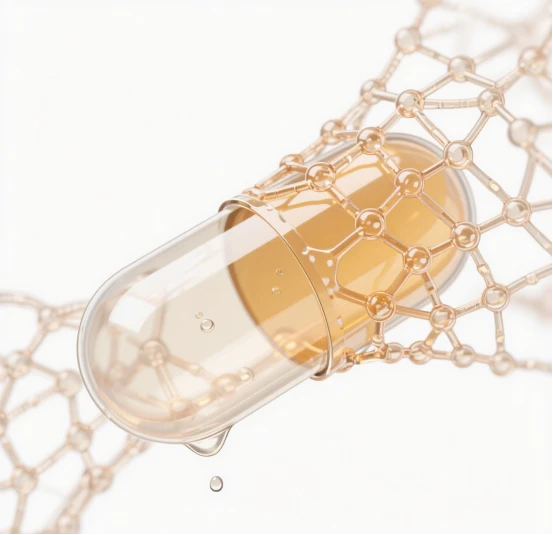
The rehydration of gelatin empty capsules is essentially a transition of gelatin molecular chains from an ordered folded state to a disordered swollen state. In a dry state, gelatin molecules form a tight network through hydrogen bonds, resulting in a hard and brittle texture. Upon contact with water or bodily fluids, water molecules penetrate and disrupt these hydrogen bonds, prompting the molecular chains to unfold and re-form an elastic three-dimensional hydrogel network. This process is significantly influenced by temperature, pH, and ionic strength: under conditions of 37°C (close to body temperature) and a neutral environment, both the rate and extent of rehydration are optimized, ensuring rapid disintegration of the capsule in vivo while preventing premature softening during storage due to moisture absorption.
Core Manifestations of Rehydration Characteristics
Rehydration characteristics are primarily manifested in three aspects: first, swelling kinetics-high-quality capsules can complete swelling within 10–15 minutes in simulated intestinal fluid, with a swelling ratio reaching 5–8 times the original volume, ensuring timely drug release; second, recovery of mechanical strength-after rehydration, the capsule's fracture strength should be maintained between 1.5-2.5N·mm⁻², sufficient to encapsulate contents and remain intact during transportation; third, synchronized disintegration, the rehydrated capsule wall dissolves uniformly in specific pH environments, preventing localized burst release of the drug and enhancing bioavailability.
Key Value in Pharmaceutical Applications
In drug formulations, rehydration characteristics directly impact therapeutic efficacy. For enteric capsules, it is essential to control the rehydration threshold through coating technology, ensuring stability in the acidic gastric environment while enabling rapid rehydration and disintegration upon entering the intestine. For sustained- and controlled-release formulations, the rehydration rate and the formation speed of the swollen layer jointly determine the drug release profile. Furthermore, rehydration stability is a core indicator of a capsule's shelf life-under conditions of 25°C and 60% relative humidity, high-quality capsules can maintain their rehydration performance for over two years, ensuring quality throughout the drug's lifecycle.
The rehydration characteristics of gelatin empty capsules represent an intersection of materials science, physical chemistry, and pharmaceutics. With advancements in smart excipients, precisely tailoring rehydration behavior by adjusting gelatin sources (e.g., the ratio of Type A to Type B gelatin), crosslinking degree, and composite modifications can provide superior carriers for targeted drug delivery, pulsatile release, and other novel formulations-continuously driving innovation in drug delivery systems. If there is any demands on empty capsules, welcome to contact KornnacCaps.


