

Quality Inspection of Empty Capsules After Printing
In the process of drug production, the quality inspection of empty capsules after printing is an important link to ensure the safety and effectiveness of drugs. This article will provide a detailed introduction to the methods and steps for quality inspection of empty capsules after printing.
1. Visual Inspection
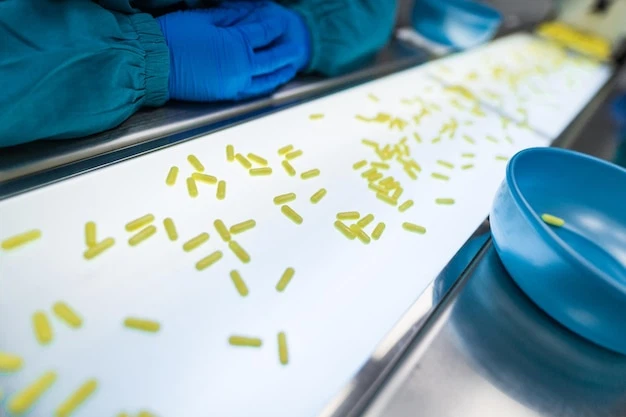
Firstly, conduct an appearance inspection. The staff need to check whether the capsules have any deformation, leakage, adhesion or other phenomena. In addition, it is necessary to check whether the printed characters are clear and complete, without problems such as blurriness or peeling. Visual inspection is usually carried out in a well-lit environment to ensure the accuracy of the inspection results.
2. Dimensional Measurement
Dimensional measurement is another important link in quality inspection. Use dedicated measuring tools, such as calipers or microscopes, to precisely measure the diameter, length and other dimensions of the capsules. Whether the size meets the standard directly affects the efficacy and safety of taking the capsule.
3. Test for the Firmness of Printed Characters
The firmness test of printed characters is to ensure that the printed characters will not fall off easily during transportation and storage. Common methods include friction testing and solvent testing. Friction testing is to check whether the printed characters are prone to wear by simulating the friction conditions during transportation. The solvent test involves placing the capsule in a specific solvent to observe whether the printed characters dissolve or fall off.
4. Inspection of Contents
The content inspection mainly involves quality testing of the drugs within empty capsules. Including the content, purity and uniformity of the drug, etc. This stage is usually carried out using advanced analytical instruments such as high-performance liquid chromatography and ultraviolet spectrophotometer.
5. Microbiological Testing
Microbiological testing is an important step to ensure the sterility of drugs. Microbial limit tests are conducted on the capsules to detect whether there is microbial contamination such as bacteria and fungi. This step needs to be carried out in a sterile environment to avoid interference from external microorganisms.
6. Heavy Metal Detection
Heavy metal detection is to ensure that drugs do not contain heavy metal elements that are harmful to the human body. The heavy metal content of empty capsules was detected by using equipment such as atomic absorption spectrometers to ensure the safety of the medicine.
7. Recording and Feedback
During the quality inspection process, the results of each step need to be recorded in detail. For substandard products, they should be promptly fed back to the production department for analysis and rectification. Meanwhile, qualified products will also proceed to the next stage of packaging and sales.
The quality inspection of empty capsules after printing is a complex and meticulous task, which requires strict control over multiple links and steps. Through scientific and standardized quality inspections, the safety and effectiveness of drugs can be ensured, and the health rights and interests of patients can be protected.


