

With the health industry flourishing today, vegetable capsules (also known as plant-based capsules) are increasingly favored by dietary supplement manufacturers and consumers due to their natural and safe properties. For pharmaceutical companies and brand owners, beyond focusing on dissolution performance and moisture content, a crucial question is often asked: How long is the shelf life of vegetable capsules?
This article will delve into the shelf life standards, influencing factors, and proper storage methods for plant capsules, providing professional reference for your procurement and inventory management.
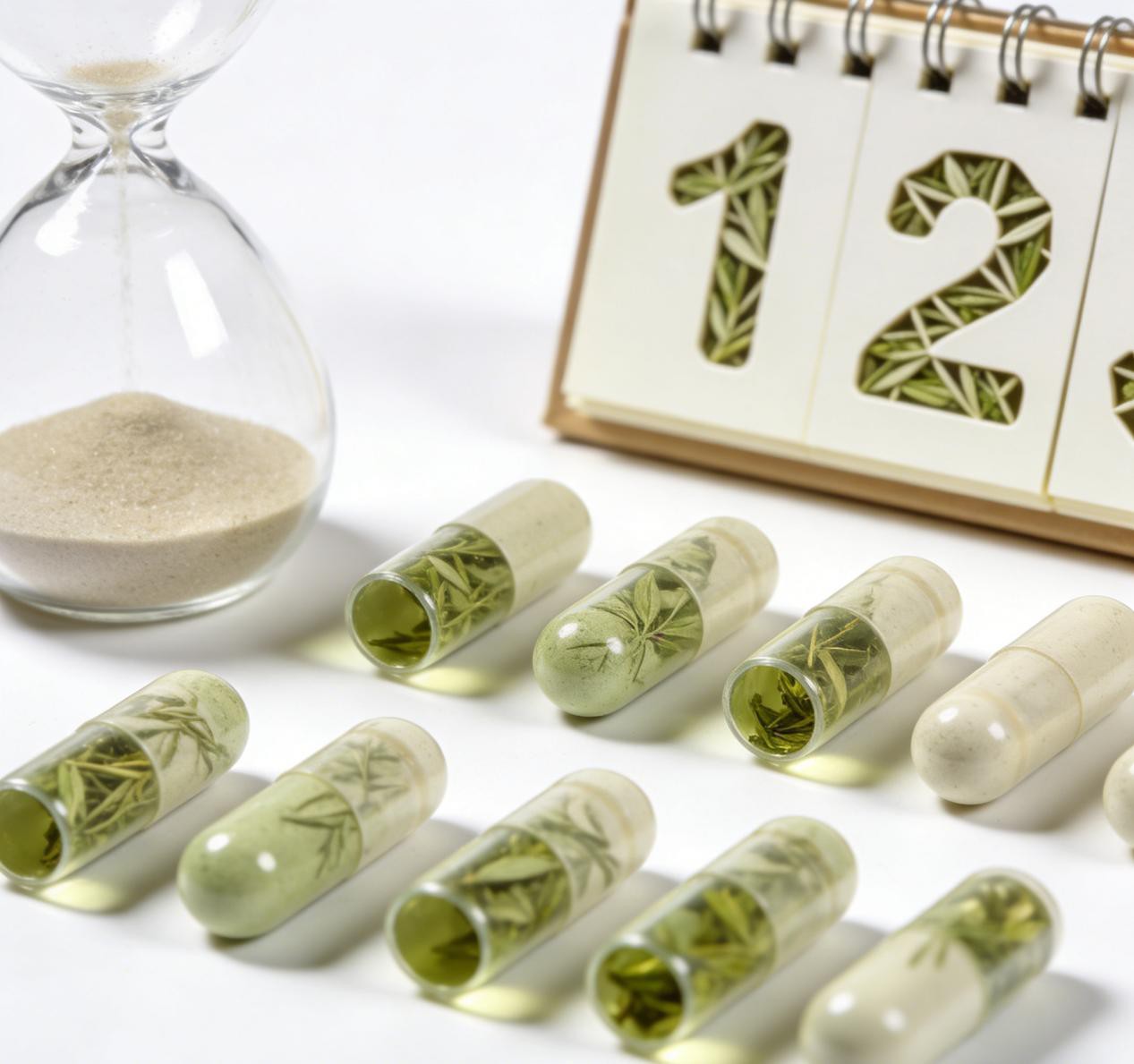
1. Standard Shelf Life of Vegetable Empty Capsules
Generally speaking, empty vegetable capsules on the market (primarily composed of Hydroxypropyl Methylcellulose, or HPMC) have a standard shelf life ranging from 3 to 5 years when unopened and stored correctly.
In comparison, traditional empty gelatin capsules usually have a shelf life of 2 to 3 years. The reason why empty vegetable capsules enjoy a relatively longer shelf life is mainly attributed to the stable chemical properties of HPMC. Derived from plant fibers, HPMC is less prone to cross-linking reactions and demonstrates stronger adaptability to temperature and humidity, providing a longer window of quality stability for the finished product.
2. Key Factors Affecting Shelf Life: Moisture and Packaging
Although the theoretical shelf life of vegetable capsules is long, the actual shelf life depends heavily on moisture control and packaging sealing.
Moisture Balance: Vegetarian capsules contain a certain amount of moisture to maintain toughness. If the environmental humidity is too high, the empty capsules will absorb moisture, becoming soft and sticky; if the humidity is too low, they will lose moisture, becoming brittle and fragile. High-quality vegetable empty capsules usually possess good moisture-locking properties, but they still require strict storage environment support.
Packaging Specifications: The form of packaging directly determines the length of the shelf life.
Fully Sealed Plastic Bag Packaging: If the capsules are packed in fully sealed PE bags accompanied by desiccants, their shelf life can typically reach 3 to 5 years.
Fiber Drum Packaging: For packaging consisting of an outer fiber drum with an inner plastic liner, although moisture resistance is good, permeability is slightly higher than all-plastic packaging. The shelf life for this type of packaging is recommended to be kept within 2 to 3 years.
3. Proper Storage Conditions Are Key
To ensure that plant-based capsules maintain their optimal state within their shelf life, scientific storage conditions are indispensable:
Temperature Control: It is recommended to store them in a cool place with a temperature maintained between 15°C and 25°C.
Humidity Control: Relative humidity should be controlled between 35% and 65%. Although vegetable empty capsules are more resistant to high humidity than gelatin capsules, extreme humidity can still damage the capsule structure.
Light and Dust Protection: Avoid direct sunlight and keep the warehouse clean.
4. Procurement Advice: Focus on the Manufacturing Date
For pharmaceutical and dietary supplement manufacturers, when purchasing vegetable empty capsules, one should not only ask how long the shelf life is, but also pay close attention to the manufacturing date.
Since empty capsules are excipients that come into direct contact with drugs, it is advisable to follow the First-In, First-Out (FIFO) principle after procurement and to inspect the integrity of the outer packaging immediately upon delivery. If packaging damage or any unusual odor or deformation of the capsules is detected, usage should be ceased immediately.
In summary, the shelf life of vegetable capsules is typically between 3 and 5 years, which is superior to traditional gelatin capsules. This time advantage offers greater flexibility for the production cycle of finished formulations. However, realizing this shelf life is built upon high-quality raw materials (such as imported HPMC), strict production processes, and scientific storage management. Choosing a manufacturer that partners with top-tier domestic and international raw material suppliers is the key to ensuring the long-term stability of capsules from the source.


